The High-Carb Problem: Why One Type of Sodium Isn't Enough
, by Brad Keyes, 4 min reading time
, by Brad Keyes, 4 min reading time
Short version: one form solves a chemistry problem, the other solves a physiology problem. You need both.
Here's the long version.
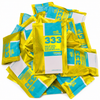
333 Half Evil is a high-carb endurance fuel - 84g of carbohydrate and 474mg of sodium in a single bottle. The whole idea is to move a lot of fuel with one drink instead of chasing gels all day.
But that much carbohydrate in one bottle creates a real formulation problem. Every dissolved particle raises the drink's osmolality, and a drink that's too concentrated pulls water into your gut instead of letting it move out. That's the mechanism behind a lot of mid-race GI trouble - the bloating, the sloshing, the sudden urgent detour at mile 60.
So when we add sodium, the question isn't just "how much." It's "what that sodium costs us in osmotic load."
We split it down the middle. Half of 333's sodium comes from sodium citrate. Half comes from Himalayan pink salt.Here's what each one is doing.
It buffers the mix. Sodium citrate is alkaline, so it holds the drink's pH up out of the range where a bottle you're sipping all day starts to sit rough. Most drink mixes run acidic, because acid is cheap flavor. Over eight-plus hours, that's not a small detail - and it's the reason this one matters more the longer your day gets.
It keeps the mix stable. Citrate is a natural chelator. It holds minerals in solution instead of letting them settle in the bottom of your bottle, and it helps hold off off-flavors.
And it's efficient. Per milligram of sodium delivered, sodium citrate contributes about a third fewer osmotically active particles than sodium chloride does. Same sodium, less crowding. On its own that's a modest saving against 84g of carbs - we're not going to oversell it. But when you're already running near the ceiling of what a bottle can carry, you take every bit of headroom you can get.
One honest note: sodium citrate is also studied as a blood buffer, but at doses many times higher than what's in any drink mix. We're not going to pretend a scoop of 333 is buffering your lactate. It isn't. This is about the drink, not your bloodstream.
If sodium citrate is so useful, why not go all-in?
Chloride. You sweat it out at close to the same rate as sodium, and it's the primary anion in your extracellular fluid - fluid balance, stomach acid, acid-base regulation. Sodium citrate delivers sodium and no chloride. A citrate-only formula is half a replacement.
The pink salt half of our sodium brings about 365mg of chloride to each serving. That's not a rounding error, and it's not an accident.
Salt also carries the flavor. Sodium citrate on its own tastes flat. Real salt gives an electrolyte drink the savory snap that makes it drinkable at hour nine - and flavor fatigue is one of the biggest reasons people stop drinking mid-event. Stopping drinking is what actually ends days.
A high-carb drink you can run all day - real sodium, real chloride, a pH that stays comfortable hour after hour, and an osmotic load we kept as low as the fuel target allowed.
Two forms of sodium, split 50/50, each one doing something the other can't.
That's the whole job.